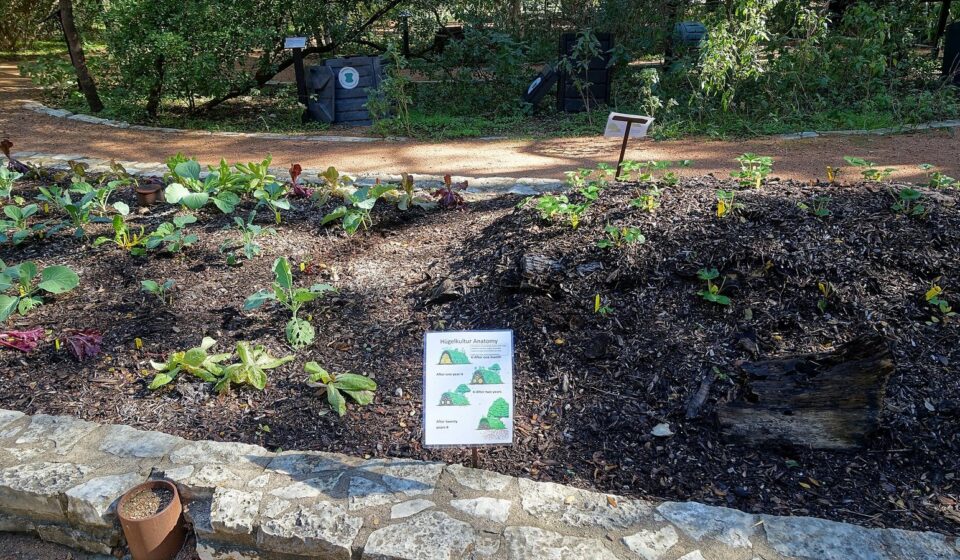

The cheapest way to fill a raised garden bed is to buy soil only for the top 12 inches or so, and fill the bottom of a tall bed with free logs, branches, leaves and grass clippings. This hügelkultur-style fill can cut the soil you buy by about half in a 24-inch bed, and the wood works like a sponge as it breaks down.
It only works in beds that are tall enough, and it needs a few rules to avoid sinking, soggy spots and starved plants. Here’s how to do it right, with exact depths for 18-, 24- and 30-inch beds.
Quick Summary / Key Takeaways
- The method: wood and branches on the bottom, leaves and clippings packed in the gaps, then soil mix on top.
- Bed height rule: beds under about 17 inches are best filled with soil mix only. There isn’t room for both layers.
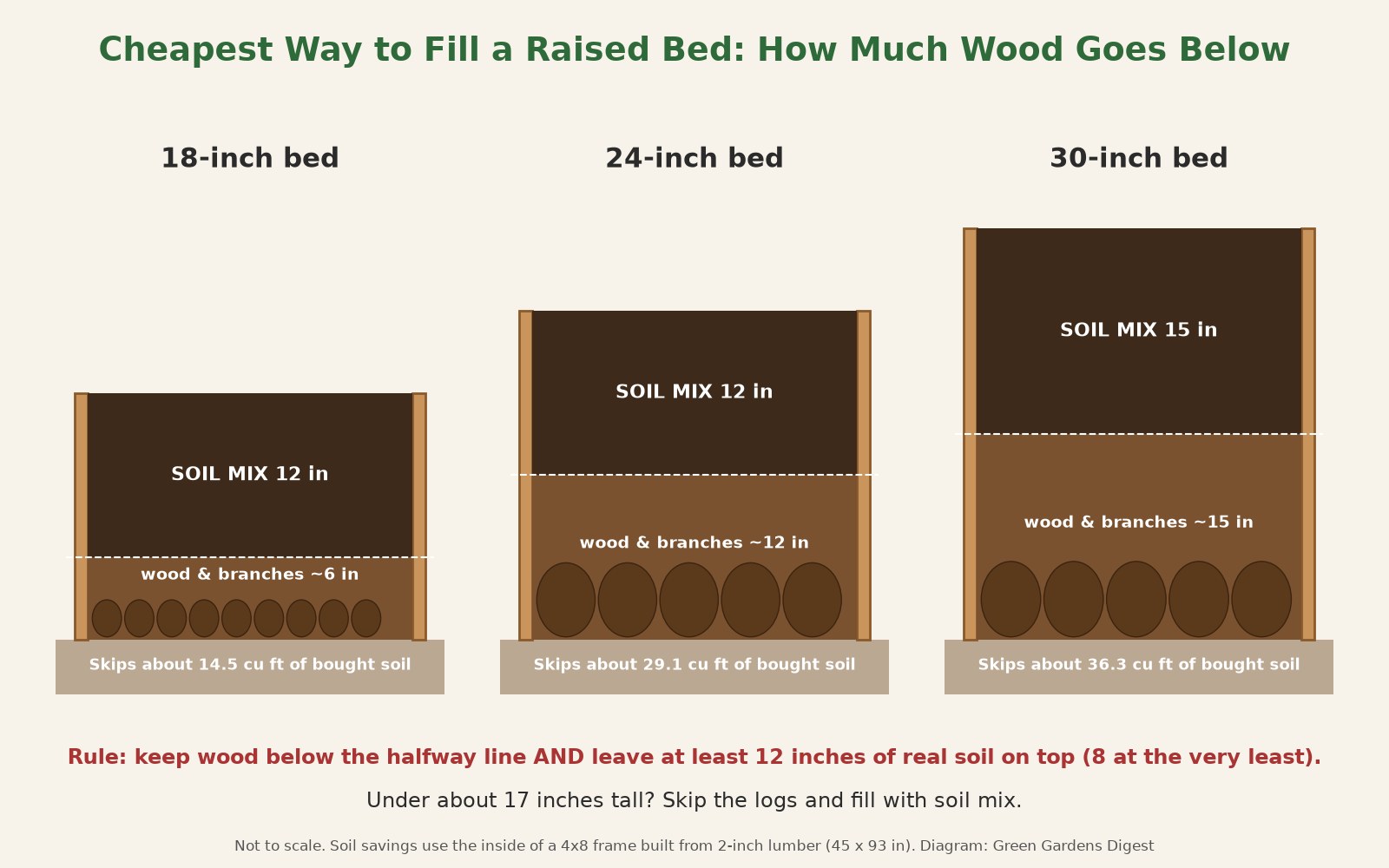
- Depth rule: keep the wood below the halfway line and leave at least 12 inches of real soil on top. Eight inches is the bare minimum.
- Savings: in a 24-inch 4×8 bed, the wood base replaces about 29 cubic feet of soil, roughly one cubic yard.
- Trade-offs: the bed will settle, so top it up with compost each year, and fresh wood can tie up nitrogen for a while.
- Skip: treated lumber, diseased wood, black walnut, glossy paper, pet waste and anything sprayed with weed killer.
The Cheapest Way to Fill a Raised Garden Bed: How It Compares
Here’s how the common ways to fill a tall bed stack up. Dollar amounts depend on your local prices, so we compare how much soil you have to buy.
| Method | Soil you buy (24-inch 4×8 bed) | Effort | Best for |
|---|---|---|---|
| All bought soil, in bags | About 58 cubic feet (2.2 cubic yards) | Low | Quick setups and small beds, but the priciest per cubic foot |
| All bought soil, in bulk by the yard | About 58 cubic feet (2.2 cubic yards) | Medium: tarp, wheelbarrow, delivery | Beds under 17 inches, where there’s no room for a wood base |
| Hügelkultur base, 12 inches of soil on top | About 29 cubic feet (1.1 cubic yards) | Medium: you gather and stack wood | Tall beds on open ground, anyone with yard waste or a free source |
The last row is our recommendation. It’s the best balance of savings and a deep, forgiving root zone.
Will This Work in Your Bed? Height Rules
Roots need real soil, so the wood should stay in the lower half and never crowd the planting layer. Beds under about 17 inches tall are better filled with soil alone. If you’re building one now, our 4×8 raised bed build guide shows how to make a taller frame by stacking two tiers.
| Bed height | Wood and branches (max) | Soil mix on top | Soil you buy (4×8) | Soil the wood replaces |
|---|---|---|---|---|
| 12 inches | None | 12 inches | 29.1 cu ft | Nothing, skip the logs |
| 18 inches | About 6 inches | 12 inches | 29.1 cu ft | 14.5 cu ft |
| 24 inches | About 12 inches | 12 inches | 29.1 cu ft | 29.1 cu ft |
| 30 inches | About 15 inches | 15 inches | 36.3 cu ft | 36.3 cu ft |
These figures use the inside of a frame built from 2-inch lumber, 45 by 93 inches. Want the math for any depth? Our how many bags of soil for a 4×8 raised bed chart has every height from 8 to 24 inches.
How to Fill a Raised Garden Bed With Hugelkultur Layers, Step by Step
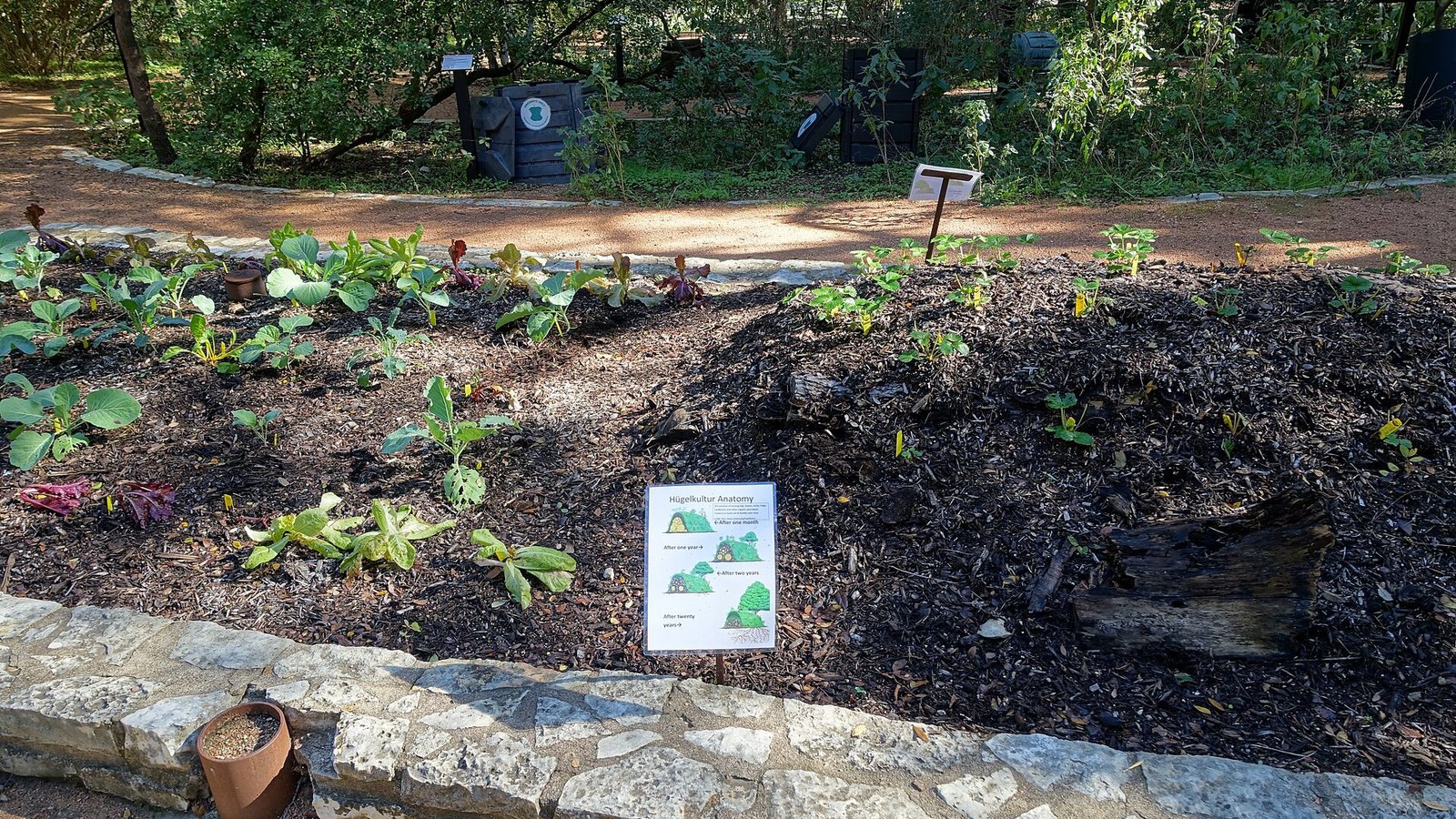
Work from the biggest, slowest-rotting material at the bottom to the finest soil at the top. Water each layer as you go so it settles.
- Prep the ground. Remove or mow down grass, loosen the soil underneath with a garden fork, and lay ¼-inch hardware cloth first if gophers or voles are a problem.
- Add cardboard (optional). Lay plain brown cardboard with the tape and labels removed over lawn to smother grass. Soak it well.
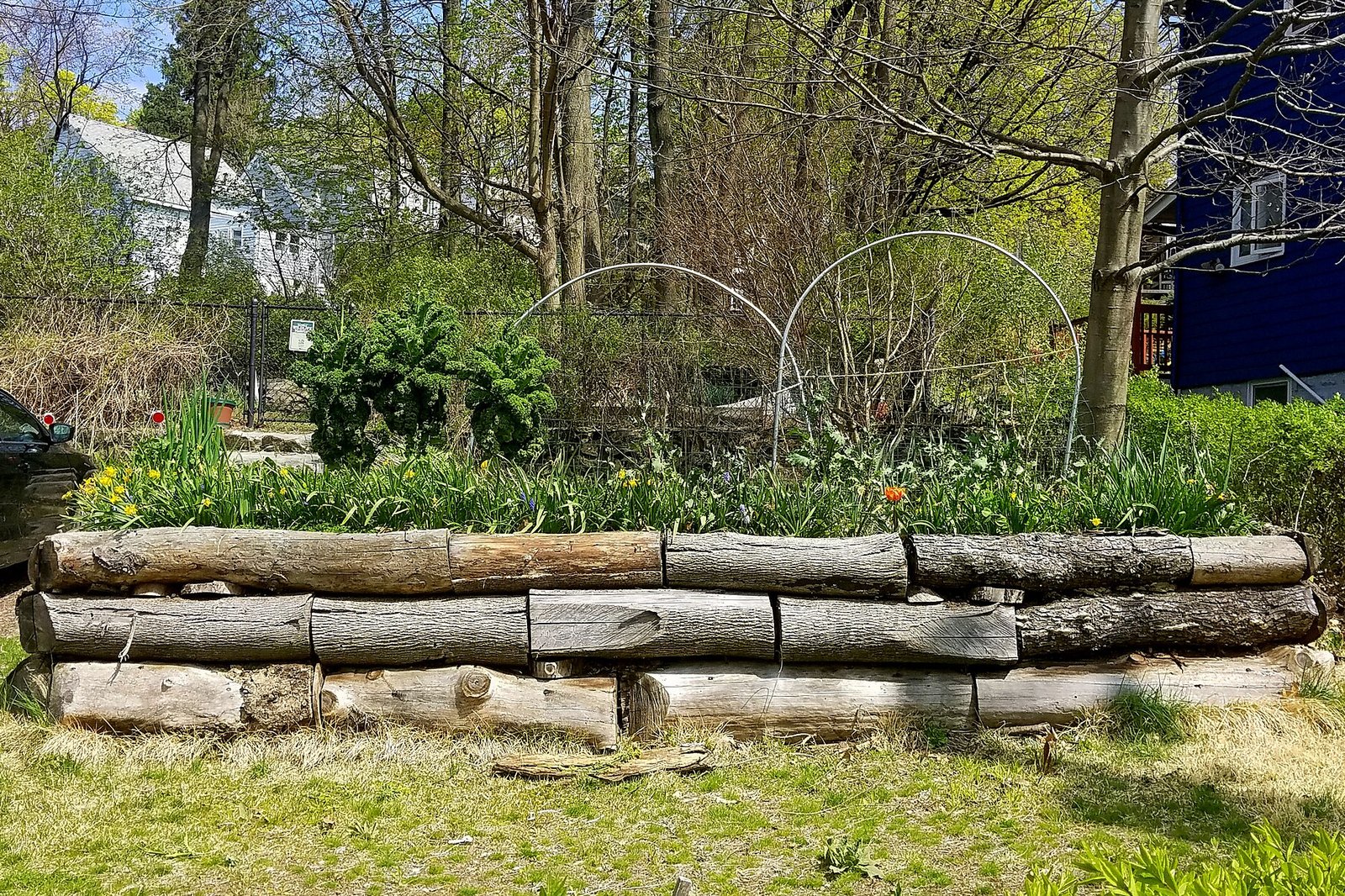
- Lay the logs. Use the biggest pieces first, packed tightly, and stay under your height limit from the table above. Logs that have already started to rot are ideal because they break down faster.
- Add branches and twigs. Fill the gaps between logs with smaller pieces, working from larger to smaller.
- Pack the gaps. Stuff fallen leaves, straw, untreated grass clippings and some finished compost into every air pocket. Press it down firmly and water well.
- Add a nitrogen buffer. Put 2 to 3 inches of green material, such as fresh clippings or composted manure, on top of the wood layer and tamp it down. This helps keep the wood from tying up nitrogen near the roots.
- Fill with soil mix. Add at least 12 inches of topsoil and compost (see the mix below). Mound it a little, since it will settle.
- Water deeply and plant. Soak the whole bed, top off any dips after a day or two, then plant and mulch the surface.
Free and Cheap Fill Material: Where to Find It
| Material | Where to get it free or cheap | Watch out for |
|---|---|---|
| Logs and big branches | Your own pruning, storm cleanup, neighbors, firewood scraps | Black walnut, diseased trees and treated wood |
| Branches and twigs | Curbside bundles, yard cleanup | Thorny or diseased material |
| Wood chips | Tree-service drop-offs, city mulch piles | Fresh chips tie up more nitrogen than logs do |
| Leaves | Your yard, neighbors’ fall bags, town leaf piles | Shred if you can; whole leaves can mat |
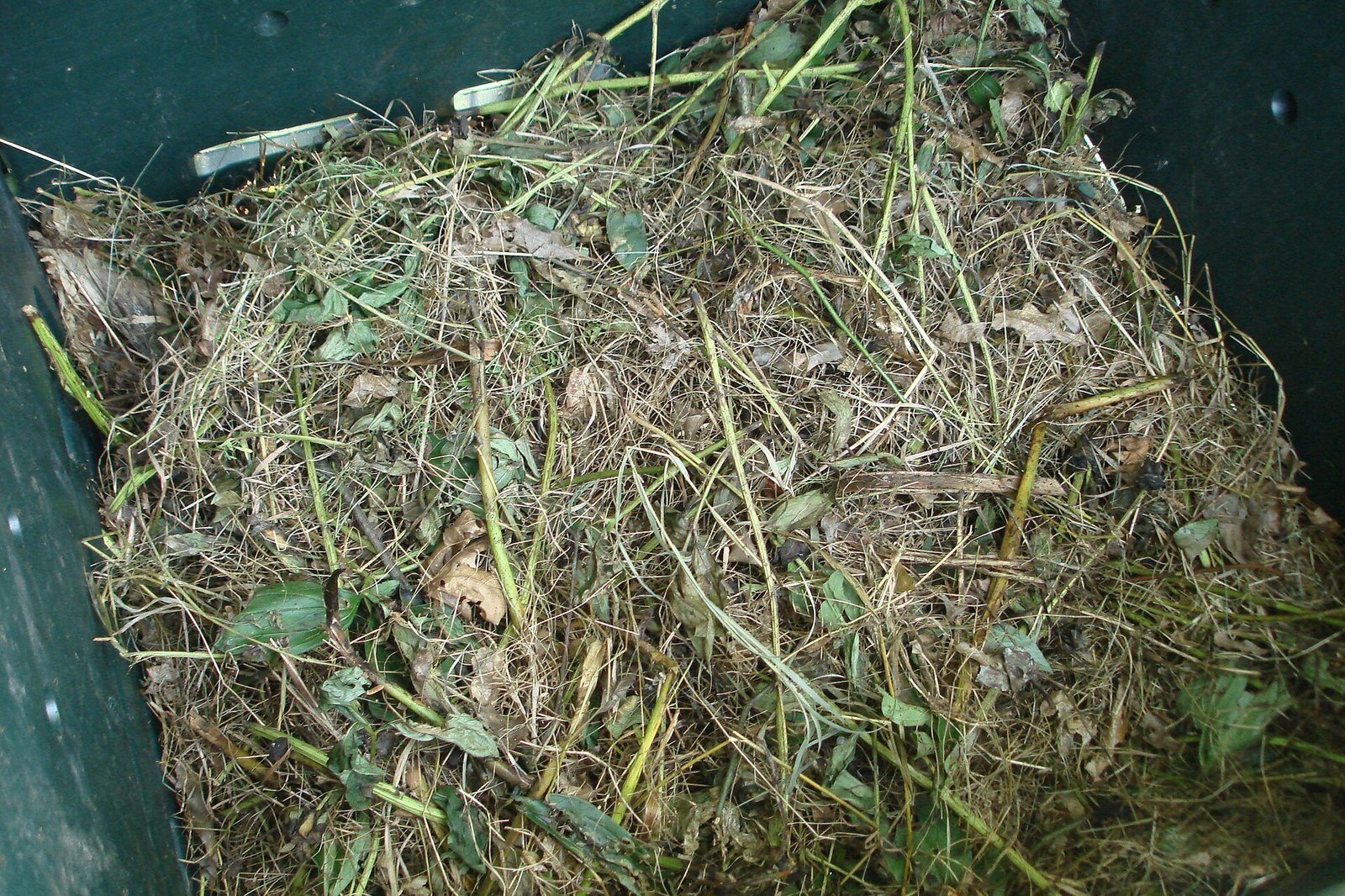
| Grass clippings | Your own lawn | Skip any lawn treated with weed killer; mix thinly with browns so they don’t turn slimy |
| Straw and cardboard | Spare bales, appliance-store boxes | Remove tape; avoid glossy printed paper |
| Finished compost | Municipal sites, community compost days, your bin | Make sure it’s fully finished |
| Topsoil | Bulk supplier, by the cubic yard | Know the source; avoid free fill dirt from unknown sites |
What Not to Put in Your Raised Bed
- Pressure-treated or painted lumber, railroad ties and anything with chemical residue
- Diseased trees, plants or leaves, which can carry problems into your vegetables
- Black walnut wood and leaves, which can harm some plants
- Pet waste, meat, dairy and greasy kitchen scraps
- Glossy or colored printed paper and tape-covered cardboard
- Grass clippings or hay from lawns and fields that were sprayed with weed killer
Does Wood Steal Nitrogen From Your Plants?
Not exactly, but it can tie it up for a while. As wood breaks down, microbes use nitrogen to do the job, so plants growing right against fresh wood can look pale and stunted. Wood chips do this more than big logs because they have more surface area.
You can head it off easily. Keep plenty of real soil on top, pack green material around the wood, and use logs that are already rotting. If plants still look yellow, feed lightly with an organic nitrogen fertilizer, or plant peas or beans, which add nitrogen as they grow.
Expect Settling and Top Up Every Year
This is the main trade-off. As the wood and leaves rot, the bed sinks, often noticeably in the first year or two. Tamping each layer and filling air pockets with soil and compost helps.
Plan to add a few inches of compost each season until the woody layer has mostly broken down. If you’re calculating a top-up, our soil bag chart for a 4×8 bed makes the quick math easy.
The Soil Mix for the Top Layer
The top layer is where you spend your money, so make it count. A good starting point is about 60% screened topsoil, 30% finished compost and 10% coarse sand or perlite. A plain 70% topsoil and 30% compost blend also works well.
For 12 inches of soil in a 4×8 bed built from 2-inch lumber (about 29 cubic feet), that’s roughly 20 cubic feet of topsoil and 9 cubic feet of compost in the 70/30 version. Our 4×8 raised bed guide covers more mix options.
Common Mistakes to Avoid
- Using this method in a short bed. Under about 17 inches, there isn’t room for wood and enough soil.
- Making the wood layer too deep. Keep it under the halfway line, with at least 12 inches of soil above.
- Leaving big air gaps. Pack leaves, clippings and compost between pieces, or the bed will sink unevenly.
- Skipping the watering. Dry wood soaks up moisture. Water each layer as you build.
- Using fresh wood with no nitrogen buffer. Add a green layer and lots of soil.
- Forgetting to top up. Plan for a refill each season.
- Using unknown wood. If you can’t tell what it is, leave it out.
Frequently Asked Questions
What is the cheapest way to fill a raised garden bed?
Fill the bottom half of a tall bed with free logs, branches, leaves and grass clippings, then add at least 12 inches of topsoil and compost. Buy the soil by the cubic yard rather than in bags.
How do you fill a deep raised garden bed cheaply?
Stack wood in the lower half, pack the gaps with leaves and clippings, add a nitrogen-rich green layer, and finish with 12 inches of soil mix. For a 24-inch bed, that cuts the soil you buy by about half.
Can you put logs in the bottom of a raised bed?
Yes, in a tall bed on open ground. Use untreated, disease-free wood below the halfway line, and keep plenty of soil above it. Beds shorter than about 17 inches should skip it.
How deep should the soil be on top of hugelkultur layers?
At least 12 inches is a good target, and 8 inches is the bare minimum. Deeper soil gives roots more room while the wood below is still rotting.
How long until the wood breaks down?
Smaller pieces and logs that are already rotting break down sooner, while big, dense logs can take much longer. Either way, the bed keeps settling until most of it has rotted, so plan to refill it.


Comments are closed.
[…] Done right, that cuts the soil you buy by about half. We walk through the layers, the height rules and the mistakes to avoid in the cheapest way to fill a raised garden bed. […]
[…] two-tier bed, you don’t have to fill all 54 cubic feet with purchased soil. Our guide to the cheapest way to fill a raised garden bed has exact wood-layer depths for beds from 12 to 30 inches tall. A hügelkultur approach for raised […]